From incoming enquiries to organised follow-up
CRM, Integrations & Business Automation · Operational
I designed and built a connected lead-management system for a real estate advisory business. It brings website enquiries, business email, customer context and next actions together in one CRM, with practical automation, selective AI assistance and human control over customer communication.
A real operational project, built end to end and tested with structured scenarios and a live CRM integration check.
The business challenge
A new enquiry should not become another message someone has to remember, copy and chase. Information can arrive through different channels, the next step can be unclear, and context can become separated from the customer record.
I needed to make lead handling more consistent while keeping customer relationships personal and decisions understandable.
What I built
One place for enquiries and conversations
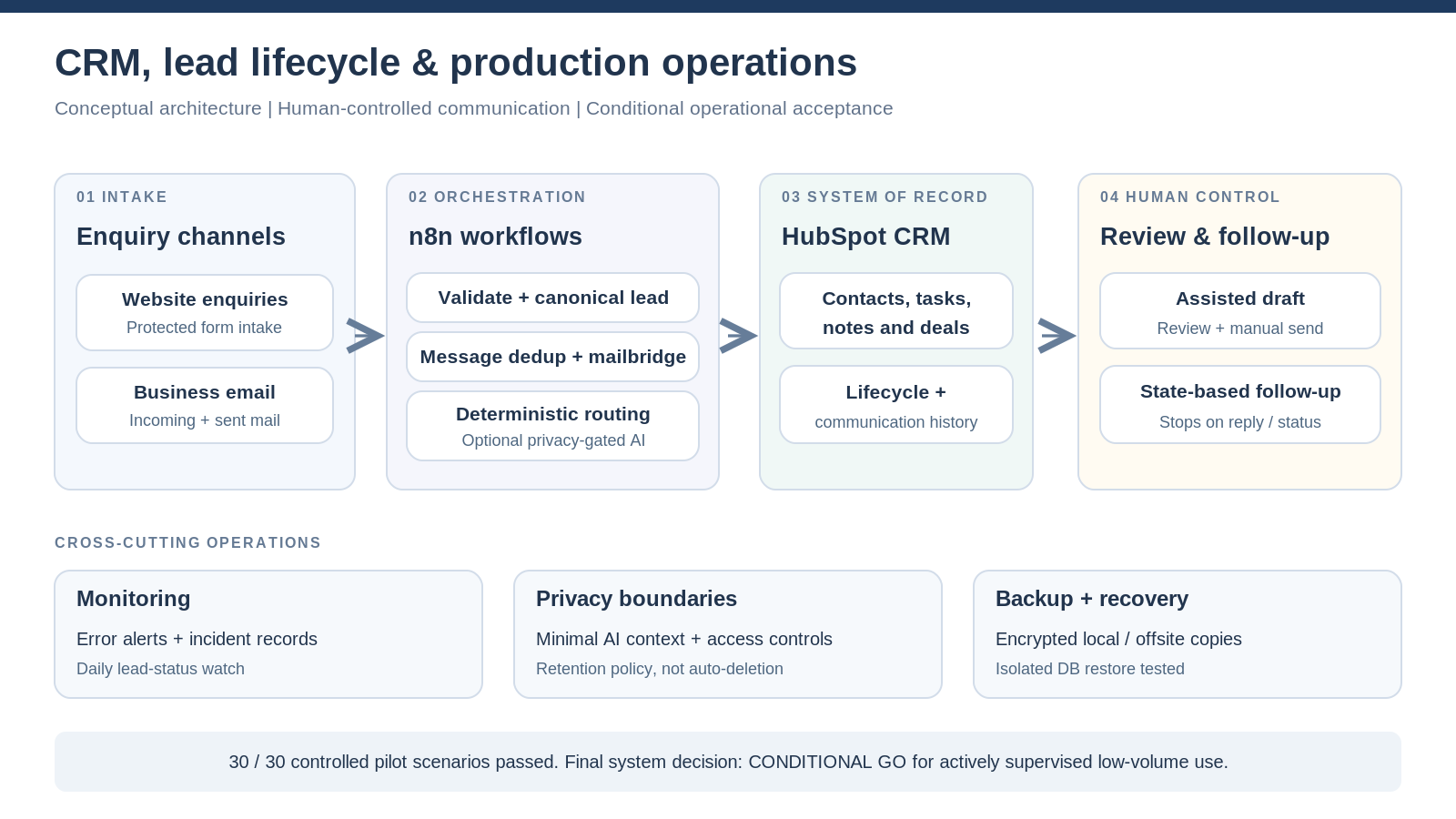
I connected the website and business email to a shared customer history. Validated website submissions become CRM records; relevant incoming and sent emails are linked to the contact.
Clear qualification and next steps
I turned lead information into consistent records, with business rules for routing, notes and follow-up tasks. A Deal is created only with explicit permission, keeping commercial approval separate from routine processing.
AI assistance with human control
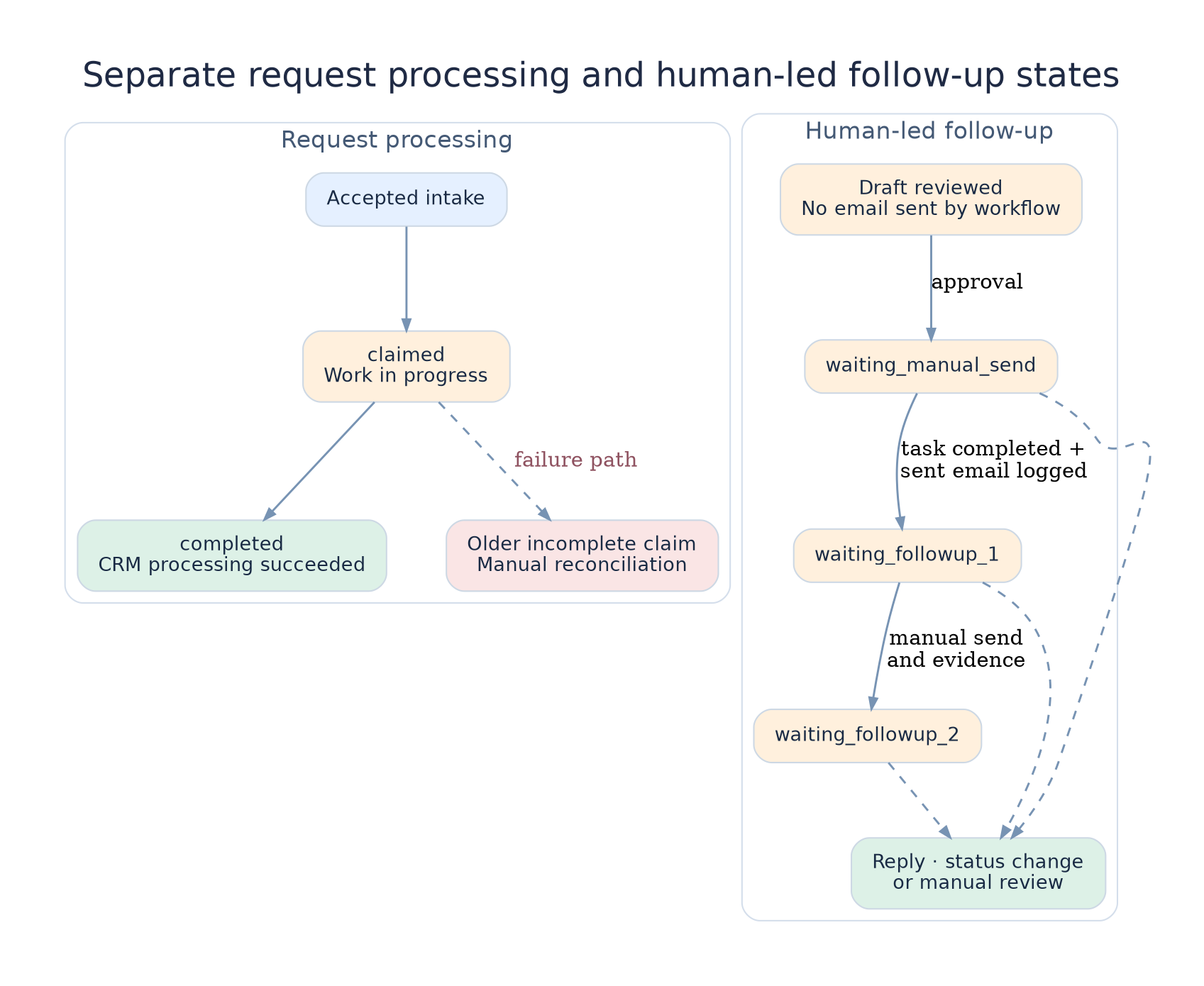
I used AI to help structure free-text requirements and prepare response drafts where useful. People review and send customer emails and make commercial decisions. Follow-up tracks next actions and stops or redirects when a customer replies or their status changes.
Built for day-to-day operation
I added duplicate safeguards, monitoring, alerts, encrypted backups and a recovery runbook. These help an operator investigate uncertain outcomes instead of assuming every system update succeeded.
What this makes possible for a business
This project is a practical example of the systems I can build for teams that have grown beyond disconnected forms, inboxes and spreadsheets.
- Less manual coordination: connect existing tools and reduce repetitive handoffs between website, email and CRM.
- More consistent follow-up: make ownership, next actions and customer context visible, with safeguards against avoidable duplication.
- Controlled use of AI: support interpretation and drafting while keeping sensitive actions, approvals and customer relationships under human control.
These are process benefits the solution supports. Real enquiry volume has been low; I have not measured revenue growth, conversion gains or hours saved.
How I approached it
I mapped the workflow and CRM data first, connected the existing tools and applied explicit business rules to important decisions. I used AI selectively, then tested failure paths and added monitoring, backups and a manual recovery procedure.
Integrate · Automate · Agentify, selectively. I keep the process understandable for the person running it. I can bring the same hands-on design and implementation to a remote automation, integration or solutions role, or a focused business-systems project.
Evidence and operating status
- Controlled pilot: 30/30 synthetic lead scenarios passed. These mainly tested internal scenario processing, not 30 complete customer journeys.
- Live CRM check: a later test of the updated production workflow created one synthetic contact, note and task, with no Deal.
- Recovery checks: 5/5 local recovery simulations passed. PostgreSQL restoration and configuration/offsite decryption were demonstrated in isolation; monitoring and incident handling were reviewed.
- Operational · human-supervised: accepted on 28 October 2026 for a small business workflow. This does not establish autonomous recovery, zero data loss or high-volume unattended scale.
A closer look at the system
The earlier October assessment was conditional. Subsequent recovery work and the live CRM check supported the later operational decision. Safeguards and monitoring support investigation; they do not guarantee exactly-once processing, complete mailbox coverage or automatic recovery.
Selected technology
Telegram supports alerting. Encrypted local and Backblaze B2 backups support recovery planning. AI is limited to interpretation and drafts; customer communication and Deal approval stay with a person.
Need your systems to work together?
I help connect existing tools, automate routine processes and introduce AI where it improves the work, while keeping important decisions visible and controllable.